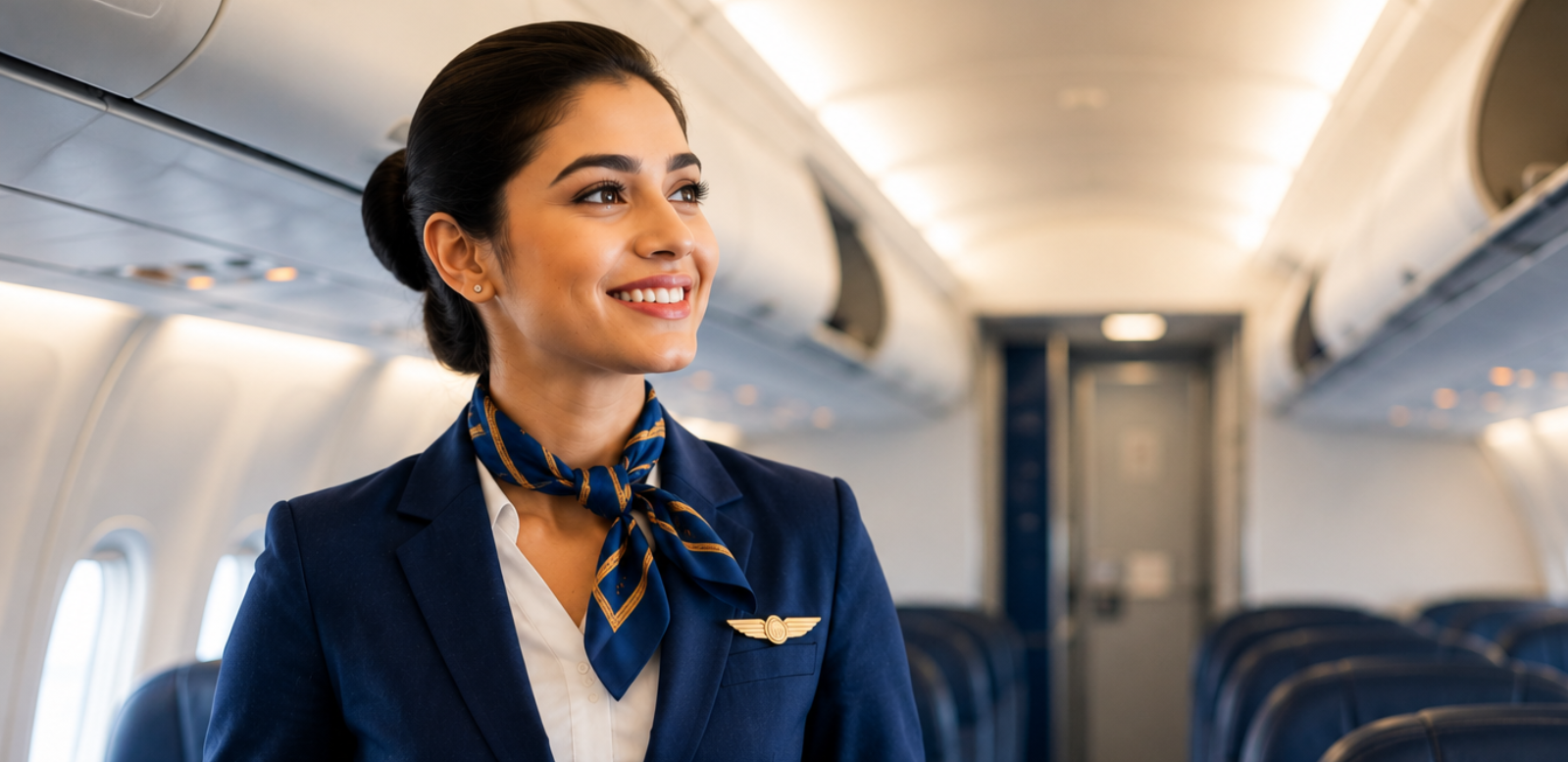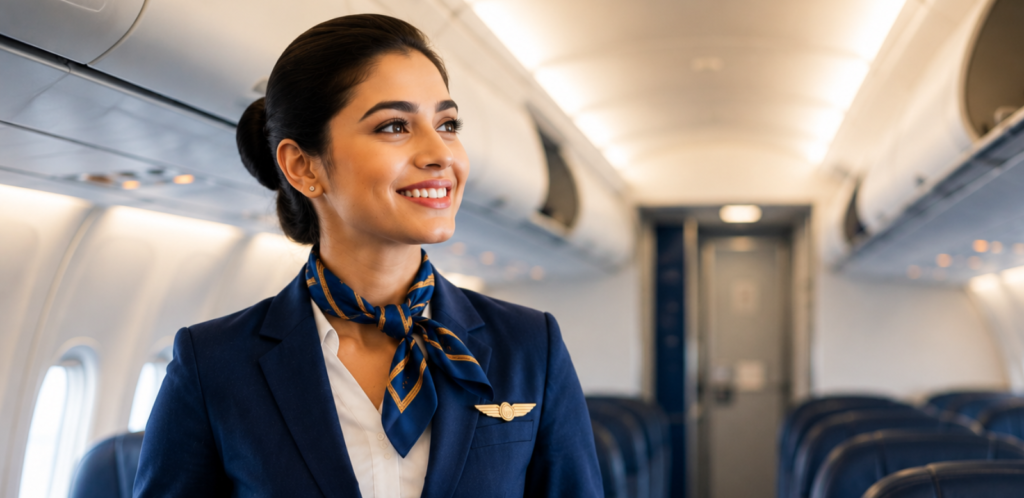
An aviation career is often associated with travel, exciting destinations and a fast-paced professional lifestyle. Among the many opportunities in the aviation industry, a Cabin Crew Career remains one of the most popular choices for students who enjoy interacting with people, working in dynamic environments and being part of the travel industry.
However, being a cabin crew professional is much more than welcoming passengers and serving meals on a flight. It is a responsible role that requires communication skills, confidence, discipline, safety awareness and the ability to remain calm in different situations.
If you are considering aviation as a career option, this guide will help you understand the eligibility requirements, training process and what you can realistically expect from a cabin crew career.
What Does a Cabin Crew Professional Do?
Cabin crew members have to ensure passengers have a safe, comfortable, and pleasant experience during a flight. They work as part of the airline’s onboard team and follow established safety and service procedures.
Some of their responsibilities may include:
- Assisting passengers during boarding and deboarding
- Demonstrating safety procedures and equipment
- Responding to passenger queries and requirements
- Ensuring passengers follow safety instructions
- Providing onboard service
- Handling unexpected situations calmly
- Coordinating with other cabin crew members and the flight team
The role requires a balance between customer service and responsibility. Passenger safety remains essential to the profession.
Who Can Build a Cabin Crew Career?
A Cabin Crew Career can be a proper fit for students who are good at communication and love to travel, explore and work with people from different backgrounds.
While eligibility requirements vary by airline and role, candidates are generally expected to meet certain educational, communication, health, and professional standards.
Common requirements may include:
- Completion of the required educational qualification
- Good communication skills
- Confidence and professional presentation
- Fluency in English and, in some cases, additional languages
- Physical and medical fitness as required by the employer
- The ability to work flexible schedules
- A positive and customer-focused attitude
Remember that every airline may have its own eligibility criteria. Requirements related to education, age, appearance, medical fitness, height or other factors vary by institution. Therefore, candidates should always go through the latest requirements of the airline or organisation they wish to apply to.
Educational Eligibility for Cabin Crew Training
Many students wonder what qualification is required to begin preparing for a cabin crew career. Different training programs and employers may have different eligibility criteria. In many cases, candidates are expected to complete Class 12, while certain aviation and hospitality-related training opportunities may have their own admission requirements.
Students should carefully check:
- The eligibility criteria of the training institute
- The qualification requirements of the airlines they want to apply to
- The recognition and credibility of the training program
- Whether the course includes practical and professional skill development
Students passionate about aviation should focus not only on meeting the minimum academic requirements but also on developing the professional skills the industry needs.
What Will You Learn During Cabin Crew Training?
Cabin crew training prepares students for the professional environment of the aviation industry. A good training program can help students develop the knowledge, communication skills, and confidence required to understand the role’s expectations. Depending on the course, training may cover areas such as:
Aviation and Airline Basics
Students may learn about the aviation industry, airline operations and the professional responsibilities associated with working as cabin crew.
Passenger Service
Cabin crew professionals interact with passengers throughout the journey. Training may focus on communication, service standards, passenger handling and creating a positive travel experience.
Safety Awareness
Safety is a major responsibility in aviation. Students may be introduced to safety procedures, emergency awareness and the importance of following established protocols.
Grooming and Professional Presentation
Professional presentation is an important part of the aviation and hospitality industries. Training may help students understand workplace grooming, etiquette and professional conduct.
Communication Skills
Clear and confident communication is essential when working with passengers and team members. Students may work on spoken English, interpersonal communication and customer interaction.
Personality Development
Confidence, teamwork, discipline and problem-solving are valuable skills in aviation. Training can help students improve their overall professional personality.
At SPIPS, students can explore career-oriented training designed to support professional development and prepare them for opportunities in the aviation and service industries.
What Is the Cabin Crew Training Experience Like?
Cabin crew training is usually practical and interactive. Students may participate in classroom learning, demonstrations, role plays and simulated situations.
For example, students may practise:
- Greeting and assisting passengers
- Professional communication
- Handling passenger requests
- Working as part of a team
- Following safety-related procedures
- Managing different situations calmly
- Maintaining professional etiquette
The purpose of training is not simply to memorise information. It helps students feel comfortable in professional situations where confidence, awareness, and communication matter.
Students who actively participate in training often gain more than technical knowledge; they also build confidence that can help in many professional roles.
What to Expect From a Cabin Crew Career
A Cabin Crew Career can be thrilling and rewarding, but it is also demanding.
One of the biggest attractions is the opportunity to work in a dynamic environment. No two working days are necessarily the same. Depending on the airline and route network, professionals may interact with people from different cultures and travel to different destinations.
At the same time, candidates should be prepared for:
- Irregular working hours
- Early morning or late-night shifts
- Weekend and holiday duties
- Time away from home
- Physically demanding workdays
- The need to remain professional in challenging situations
Adaptability is extremely important. For students who enjoy variety, teamwork and interacting with people, these aspects can also make the profession interesting and fulfilling.
Skills That Can Help You Succeed
Academic qualifications are important, but employers also look for professional qualities. Some valuable skills for a cabin crew career include:
Strong Communication
You should be able to communicate clearly and respectfully with passengers and colleagues. Ensure utmost clarity, and resolve any disputes amicably.
Confidence
Confidence helps you handle responsibilities and interact with different types of people. In this field, you meet and handle many people almost every day.
Patience
Not every passenger or situation will be easy. Patience and empathy are valuable qualities.
Teamwork
Cabin crew members work closely with one another. Cooperation and support for your team are essential.
Adaptability
Schedules, destinations and situations can change. Being flexible helps professionals handle the demands of the job.
Responsibility
Follow safety procedures and professional standards carefully. A responsible attitude is essential in aviation.
How to Choose an Industry-aligned Cabin Crew Training Institute
Before joining any course, students should research the institute carefully. Look at factors such as:
- Course curriculum
- Eligibility requirements
- Training methodology
- Practical learning opportunities
- Communication and personality development
- Faculty experience
- Infrastructure and learning environment
- Career guidance and placement support
Avoid choosing an institute based only on promises of guaranteed jobs. A good training institute should focus on building genuine knowledge, professional skills and confidence.
Students should also understand that completing a training program does not automatically guarantee selection by an airline. Employers make recruitment decisions based on their own requirements and selection processes.
Career Opportunities Beyond Cabin Crew
The skills developed during cabin crew training can also be valuable in other customer-facing industries.
Depending on additional qualifications and opportunities, students may explore roles in:
- Airport services
- Ground operations
- Customer service
- Hospitality
- Travel and tourism
- Airline support services
- Luxury service environments
This makes aviation-related training useful for students interested in a broader career in travel, hospitality, and customer service.
Final Thoughts
A Cabin Crew Career is about much more than travelling the world. It combines responsibility, communication, customer service, teamwork, and safety awareness.
For students who enjoy meeting new people, working in a fast-paced environment and developing a polished professional personality, aviation can offer an exciting direction. The best way to begin is to understand the eligibility requirements, choose quality training, and develop the skills employers value.
At SPIPS, students can explore career-oriented learning opportunities designed to support professional growth and confidence. Before enrolling in any cabin crew training program, students should always confirm the latest course details, eligibility requirements and career opportunities. With the right preparation, dedication and positive attitude, an aviation career can open the door to exciting professional experiences and long-term growth. Your cabin crew journey starts with preparation, and every skill you build today can help you take a confident step towards the skies.