
Paramedical Institute in Thane
SPIPS offers MSBVE-affiliated government paramedical courses in Thane, combining recognised qualifications, hands-on practical training, and strong internship and placement support to prepare students for successful healthcare careers.
About the Program
Board of Vocational Education (MSBVE). The institute offers government paramedical courses in Thane across both diploma and degree levels, including DMLT, BSc MLT, MSc MLT, Advance Diploma in Radiology & Ultrasonography/Techniques and Imaging Technology.
Each program is built around practical, lab-based training rather than theory alone, so students leave with the hands-on skills that diagnostic labs, hospitals and imaging centres actually look for. Courses are affiliated or approved, as applicable, giving students recognised qualifications they can use for employment or further study. The institute works with placement partners such as Tata, Pathkind, SRL and Metropolis to support students once training is complete.
Boarding
Batch Open
Course Name
Aviation & hospitality
Course Type
Full-Time
Course Duration
6 Months – 1 Year
Certification
NSDC
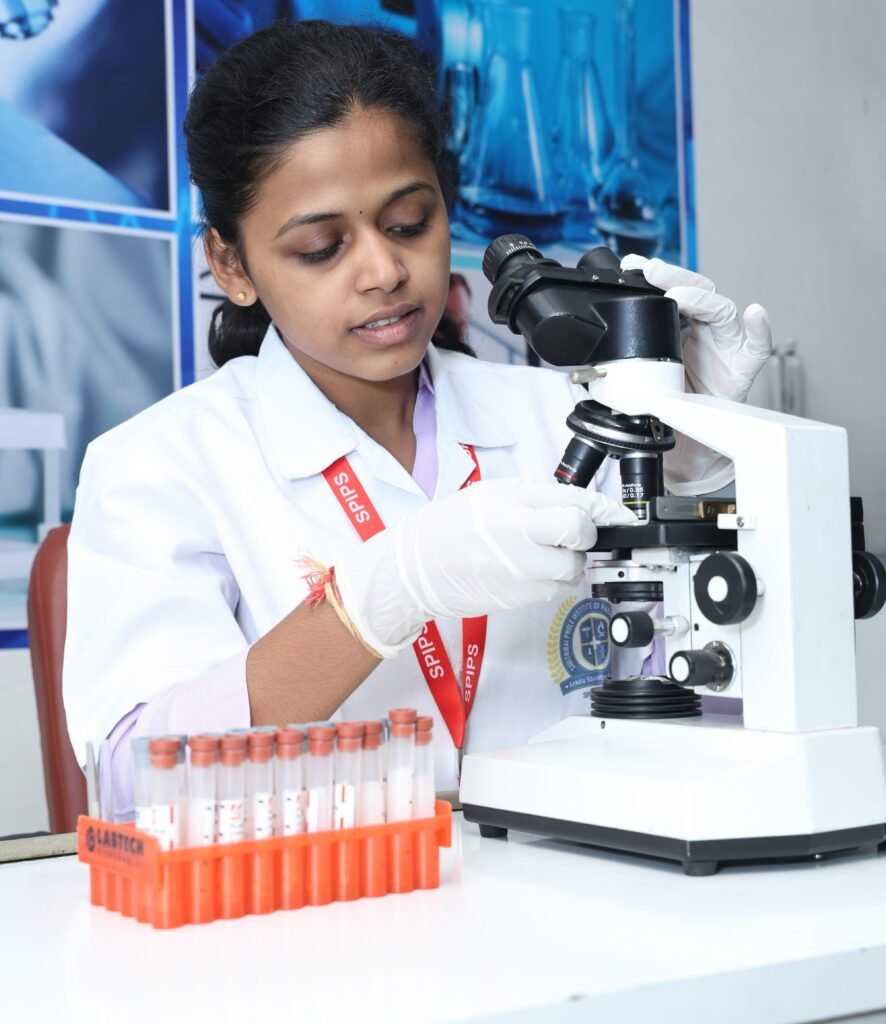
Your Trusted Paramedical Institute in Thane
Finding a paramedical institute in Thane that combines proper accreditation with genuine placement support isn’t always straightforward. Savitribai Phule Institute of Paramedical Science (SPIPS) was established to close that gap, offering government paramedical courses in Thane affiliated with the Maharashtra State Board of Vocational Education (MSBVE). Students gain a recognised qualification alongside practical, lab-based training in areas such as medical laboratory technology, radiology and imaging technology.
For families in Thane and the surrounding suburbs, that combination matters. A government paramedical course carries weight when applying for jobs or pursuing further studies, and SPIPS backs its training with internship and placement partnerships across hospitals, diagnostic labs and imaging centres. Whether the goal is a two-year diploma or a full degree, the courses at SPIPS are built to take a student from classroom training to an actual job in Thane’s growing healthcare sector.

Job Roles
Medical Lab Technician
Performing diagnostic tests across biochemistry, microbiology, haematology and blood banking departments.
Radiographer or Imaging Technologist
Operating X-ray, CT, MRI or ultrasound equipment to support diagnosis.
Phlebotomist
Drawing and handling blood samples for testing and transfusion purposes.
Lab Assistant
Supporting technologists with sample handling, equipment maintenance, and record-keeping.
Blood Bank Technician
Testing and screening donated blood to keep it safe for use.
Research Assistant
Supporting diagnostic or biomedical research projects in labs or institutions.
Skills Required
Laboratory and Imaging Techniques
Proficiency in operating diagnostic equipment and performing accurate tests or scans.
Sample and Data Analysis
Ability to interpret biological samples or imaging results correctly.
Quality Control and Safety
Understanding of lab safety protocols, radiation safety where relevant, and quality assurance procedures.
Attention to Detail
Precision matters in paramedical work, since small errors can affect a diagnosis.
Advancement and Salary
Career Advancement
Graduates can move into supervisory roles, specialise in areas such as histopathology or MRI, or pursue postgraduate study, such as an MSc in MLT, to open up research and teaching opportunities.
Competitive Salaries
Pay varies by role, location, and experience, but demand for trained paramedical professionals in diagnostics and imaging tends to keep opportunities steady across both government and private healthcare sectors.
Further Studies
Keep building on your qualification
A DMLT or BSc from SPIPS can lead to higher qualifications, such as an MSc in MLT or specialised certifications in clinical biochemistry, microbiology, or advanced imaging.
Career Opportunities
Hospitals and Nursing Homes
The largest employers of paramedical graduates, hiring across lab and imaging departments to support patient diagnosis and treatment.
Diagnostic and Pathology Labs
Independent labs and diagnostic chains hire lab technicians and technologists to run routine and specialised tests.
Imaging Centres
Dedicated radiology and imaging facilities employ radiographers and technologists for X-ray, CT, MRI and ultrasound work.
Blood Banks
Paramedical professionals test and screen donated blood to ensure it is safe before transfusion.
Research Institutions
Some graduates move into research support roles within pharmaceutical or biomedical research organisations.
Career Opportunities
Hospitals and Nursing Homes
The largest employers of paramedical graduates, hiring across lab and imaging departments to support patient diagnosis and treatment.
Diagnostic and Pathology Labs
Independent labs and diagnostic chains hire lab technicians and technologists to run routine and specialised tests.
Imaging Centres
Dedicated radiology and imaging facilities employ radiographers and technologists for X-ray, CT, MRI and ultrasound work.
Blood Banks
Paramedical professionals test and screen donated blood to ensure it is safe before transfusion.
Research Institutions
Some graduates move into research support roles within pharmaceutical or biomedical research organisations.
Frequently asked questions
SPIPS offers DMLT, BSc MLT, MSc MLT and a BSc in Radiology and Imaging Technology, covering diploma, degree and postgraduate levels.
Yes, SPIPS courses are affiliated with the Maharashtra State Board of Vocational Education (MSBVE), and the BSc Radiology and Imaging Technology program carries university affiliation and UGC approval.
SPIPS has internship and placement partnerships with organisations including Tata, Pathkind, SRL and Metropolis, which support students in finding roles after completing their course.
Students who have completed 10th or 12th standard can apply for the diploma and degree programs depending on eligibility, while relevant science graduates can apply for the postgraduate MSc MLT course.
The DMLT diploma runs for 2 years; BSc programs generally run for 3 to 4 years; and the MSc MLT is a postgraduate program for students who already hold a relevant degree.
Yes, all courses are structured around lab-based and clinical training alongside theory, so students get direct experience with the equipment and procedures they will use on the job.
Yes. SPIPS's paramedical courses are affiliated with the Maharashtra State Board of Vocational Education (MSBVE), and its BSc Radiology & Imaging Technology carries university affiliation with UGC approval — both are valid for government and private sector healthcare job eligibility.
A government paramedical course is one recognised or affiliated by a state/central education board rather than a private, unregistered diploma. SPIPS qualifies as it operates under MSBVE affiliation, giving students a certification accepted for employment and further academic progression.
DMLT is a 2-year diploma for entry-level lab technician roles; BSc MLT is a 3–4 year degree offering broader career scope and eligibility for postgraduate study; MSc MLT is a postgraduate program for science graduates aiming at specialised or supervisory lab roles.
Graduates of MLT courses at SPIPS can work as medical lab technicians, phlebotomists, lab assistants or blood bank technicians in hospitals, diagnostic labs, blood banks and research institutions, with further scope to specialise in histopathology or microbiology.
Yes. SPIPS structures its MLT and radiology courses around hands-on, lab-based training rather than theory alone, giving students direct experience with the diagnostic equipment and procedures used by hospitals, diagnostic labs and imaging centres.
Yes, students who have completed 12th standard (typically with a science background for degree-level programs) can apply to SPIPS's diploma and degree paramedical courses, including DMLT and BSc MLT.
Yes. Since SPIPS's courses are affiliated with the Maharashtra State Board of Vocational Education (MSBVE) and, for degree programs, carry UGC approval, the qualification is valid across Mumbai, Thane and the rest of Maharashtra and India.
Verify board/university affiliation, UGC approval status for degree courses, whether training is lab-based or theory-only, and whether the institute has named placement partners — all of which SPIPS in Thane provides.