
PGDMLT Course in Thane
PGDMLT is a postgraduate diploma for science graduates that provides advanced training in medical laboratory technology, preparing students for senior, supervisory, and research roles in diagnostic and healthcare laboratories.
About the Program
PGDMLT, that is, Post Graduate Diploma in Medical Laboratory Technology, is a postgraduate course for BSc graduates with a science background in chemistry, biochemistry, biotechnology, zoology, or medical laboratory technology. It builds on undergraduate knowledge and adds advanced training in clinical biochemistry, microbiology, haematology, blood banking, histopathology, cytology, immunology and serology. Eligibility generally requires a BSc in a relevant subject with a minimum aggregate as prescribed by the institute. The course is designed for students who want to move beyond entry-level lab work into senior technician, supervisory or research-focused roles within diagnostics and healthcare.
Admission
Open
Course Name
PGDMLT
UGC Approved
yes
Course Duration
1.5 Years
Certification
SNDT Women's University
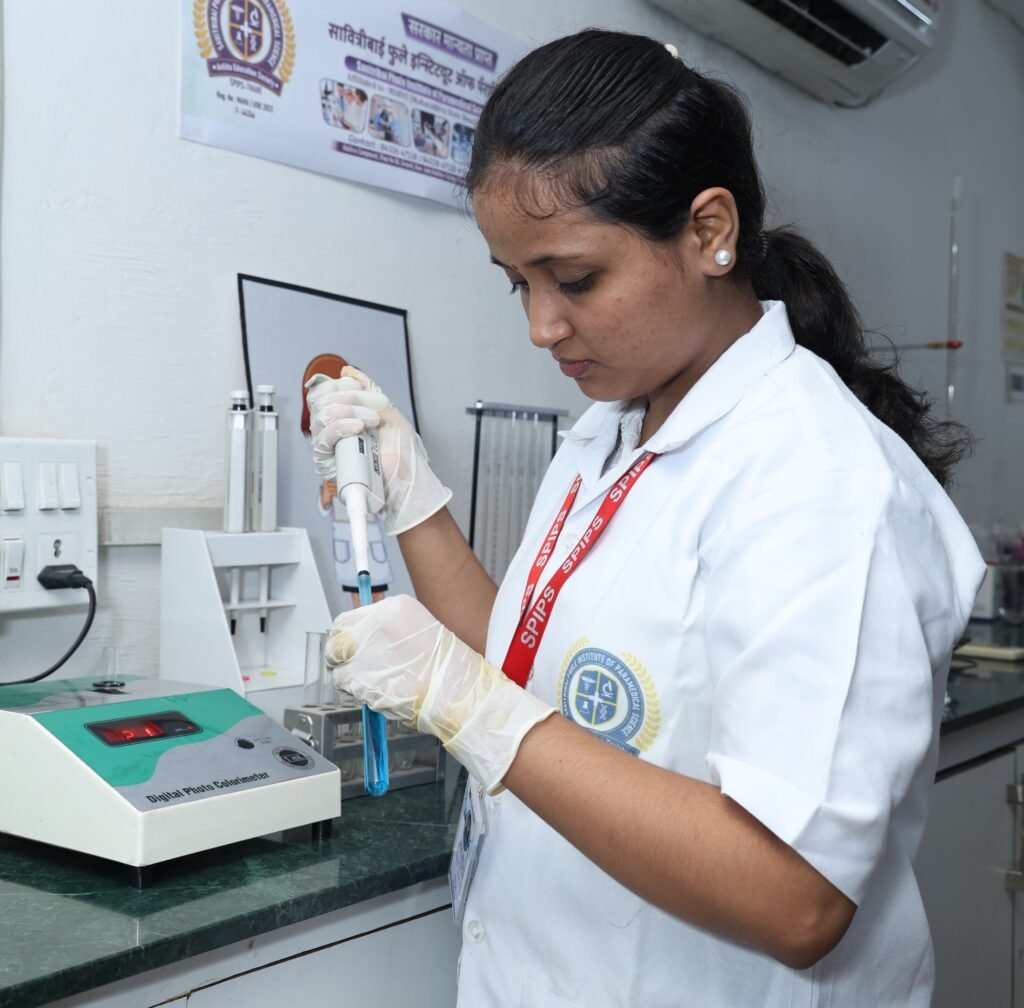
Advance Your Career with a PGDMLT Course in Thane
Graduates who already hold a BSc in a science subject often find that a basic lab qualification is not enough to move into senior diagnostic or research roles. A PGDMLT course in Thane is designed to fill that gap. It takes students who already understand the fundamentals of biochemistry, microbiology or biotechnology and pushes them further into advanced laboratory diagnostics, clinical testing and modern instrumentation.
At SPIPS, the PGDMLT course is designed for science graduates seeking a faster, more focused route into senior laboratory and diagnostic roles, rather than having to repeat undergraduate-level content. The program builds on an existing science background and adds the practical depth that hospitals, pathology labs and research institutions look for when hiring at a postgraduate level.

Job Roles
Senior Medical Lab Technologist
Handling advanced diagnostic tests and overseeing routine lab technicians.
Medical Officer (Laboratory)
Supervising laboratory operations in hospitals or diagnostic centres.
Research Associate
Supporting biomedical or pharmaceutical research projects that rely on laboratory analysis.
Quality Assurance Officer
Managing quality control and compliance across lab testing processes.
Lab Supervisor
Coordinating day-to-day operations and staff across laboratory departments.
Clinical Research Associate
Assisting with data collection and lab-based analysis in clinical trials.
Job Roles
Medical Lab Technician
Performing diagnostic tests across biochemistry, microbiology, haematology and blood banking departments.
Radiographer or Imaging Technologist
Operating X-ray, CT, MRI or ultrasound equipment to support diagnosis.
Phlebotomist
Drawing and handling blood samples for testing and transfusion purposes.
Lab Assistant
Supporting technologists with sample handling, equipment maintenance, and record-keeping.
Blood Bank Technician
Testing and screening donated blood to keep it safe for use.
Research Assistant
Supporting diagnostic or biomedical research projects in labs or institutions.
Skills Required
Advanced Diagnostic Techniques
Proficiency in clinical biochemistry, haematology, microbiology, histopathology and cytology at a postgraduate level.
Instrumentation and Analysis
Ability to operate advanced laboratory instruments and accurately interpret complex test results.
Quality Control and Compliance
Understanding of the standards and protocols that keep diagnostic results reliable and audit-ready.
Team and Process Oversight
Skills needed to guide junior lab staff and manage laboratory workflows efficiently.
Advancement and Salary
Career Advancement
PGDMLT graduates are positioned for supervisory and specialist roles that are typically out of reach for diploma-level lab technicians, including options in laboratory management and academic teaching.
Competitive Salaries
Postgraduate qualifications like PGDMLT generally command higher starting salaries than diploma-level roles, since the training covers advanced diagnostics and supervisory responsibilities, though actual pay depends on the employer, location, and experience.
Further Studies
Keep building on your qualification
Graduates can pursue an MSc in Medical Laboratory Technology or specialise further through certifications in clinical biochemistry, microbiology or molecular diagnostics.
Career Opportunities
Hospitals and Diagnostic Centres
PGDMLT graduates are hired for senior lab technologist and supervisory roles, overseeing test accuracy and lab operations.
Pathology and Research Labs
Advanced training in histopathology and cytology opens doors to specialised diagnostic and research support roles.
Pharmaceutical and Biotechnology Companies
Graduates can move into quality control, research support or analytical roles within pharma and biotech organisations.
Government and Defence Health Services
Postgraduate lab qualifications are often valued in recruitment for central government labs, railway hospitals and defence medical services.
Academics and Training
Experienced PGDMLT holders sometimes move into teaching or training roles for newer paramedical students.
Career Opportunities
Hospitals and Nursing Homes
The largest employers of paramedical graduates, hiring across lab and imaging departments to support patient diagnosis and treatment.
Diagnostic and Pathology Labs
Independent labs and diagnostic chains hire lab technicians and technologists to run routine and specialised tests.
Imaging Centres
Dedicated radiology and imaging facilities employ radiographers and technologists for X-ray, CT, MRI and ultrasound work.
Blood Banks
Paramedical professionals test and screen donated blood to ensure it is safe before transfusion.
Research Institutions
Some graduates move into research support roles within pharmaceutical or biomedical research organisations.
Frequently asked questions
PGDMLT stands for Post Graduate Diploma in Medical Laboratory Technology, an advanced course for BSc science graduates that builds deeper expertise in clinical diagnostics, laboratory instrumentation and quality control.
Candidates who hold a BSc in a relevant science subject, such as chemistry, biochemistry, biotechnology, zoology, or medical laboratory technology, and meet the eligibility criteria set by the institute, can apply.
DMLT is an entry-level diploma typically taken after Class 12. At the same time, PGDMLT is a postgraduate qualification for BSc graduates that covers more advanced diagnostic techniques and prepares students for senior or supervisory roles.
Graduates can work as senior lab technologists, quality assurance officers, research associates or lab supervisors across hospitals, diagnostic centres, pharmaceutical firms and research institutions.
Yes, the course integrates theoretical learning with hands-on laboratory training, so students get direct experience with the techniques and instruments used in advanced diagnostics.
Yes, PGDMLT graduates can pursue an MSc in Medical Laboratory Technology or specialise further through certifications in areas such as clinical biochemistry or molecular diagnostics.
Yes. The PGDMLT course at SPIPS is UGC-approved and certified by SNDT Women's University, making it a recognised postgraduate qualification valid for both government and private sector diagnostic roles.
Yes. As a UGC-approved, university-certified postgraduate diploma, PGDMLT from SPIPS is recognised for employment eligibility across government hospitals, defence medical services, and private diagnostic and pharmaceutical organisations.
BSc graduates in chemistry, biochemistry, biotechnology, zoology, or medical laboratory technology, meeting the institute's minimum aggregate requirement, are eligible for the PGDMLT course at SPIPS in Thane.
PGDMLT at SPIPS runs 1.5 years and covers advanced clinical biochemistry, microbiology, haematology, blood banking, histopathology, cytology, immunology and serology — building on undergraduate science knowledge for senior lab and diagnostic roles.
PGDMLT graduates from SPIPS can work as senior medical lab technologists, quality assurance officers, lab supervisors, research associates or clinical research associates across hospitals, diagnostic centres, pharma companies and research institutions.
Yes. Since PGDMLT at SPIPS is UGC-approved and SNDT Women's University-certified, it holds the same recognition and employment validity across Mumbai, Thane and the rest of Maharashtra.