Picture a flight delayed by three hours. The board has turned red, a family is stuck at the gate with two tired children, and a businessman is already shouting at the counter. The agent standing there has the same certificate as everyone else in the airline. What she does next, how she speaks, how she reads the room, whether her face stays calm, decides how this situation ends. That gap between holding a qualification and handling people is where aviation careers are quietly won or lost.
Most students planning a future in this industry spend their energy on the paperwork: which programme, which certificate, which institute. That’s sensible. But the certificate gets you the interview. Your personality decides whether you get through it, and whether you’re still growing in the industry five years later.
Why Airlines Hire the Person, Not Just the Profile
Ask anyone who has sat on a recruitment panel for an airline or airport service company, and you’ll hear the same thing. Technical knowledge can be taught in a few months. Temperament can’t.
Aviation is a service industry wrapped around a safety industry. Passengers are anxious, tired, hurried or excited, sometimes all four at once. Colleagues work in shifts, across time zones, under pressure that leaves very little room for ego. In that environment, employers aren’t only screening for what you know. They’re watching how you carry yourself, how you listen, and how you behave when something goes wrong.
That’s why serious aviation courses now include grooming, communication and interview preparation alongside subjects like ticketing, reservations and airline customer service. The institutes that skip this part are handing students half a career.
The Soft Skills That Actually Move the Needle
“Personality development” can sound vague, so let’s be specific. These are the skills that show up repeatedly in aviation careers, whether the role is cabin crew, ground staff, ticketing, or airport operations.
Communication that works under pressure
Speaking fluent English is a start, but it’s not the finish. What matters is clarity: giving a boarding instruction in one clean sentence, explaining a delay without over-apologising, or de-escalating a complaint without sounding scripted. Tone carries as much as vocabulary. A calm, steady voice tells a nervous passenger that things are under control, even when they aren’t quite yet.
Emotional control
Here’s what most people don’t realise: the job isn’t hard because passengers are difficult. It’s hard because you must stay composed when they are. Aviation professionals learn to separate the frustration from the person. A snapped remark at the check-in counter isn’t personal, and treating it that way is a habit worth building early.
Grooming and presence
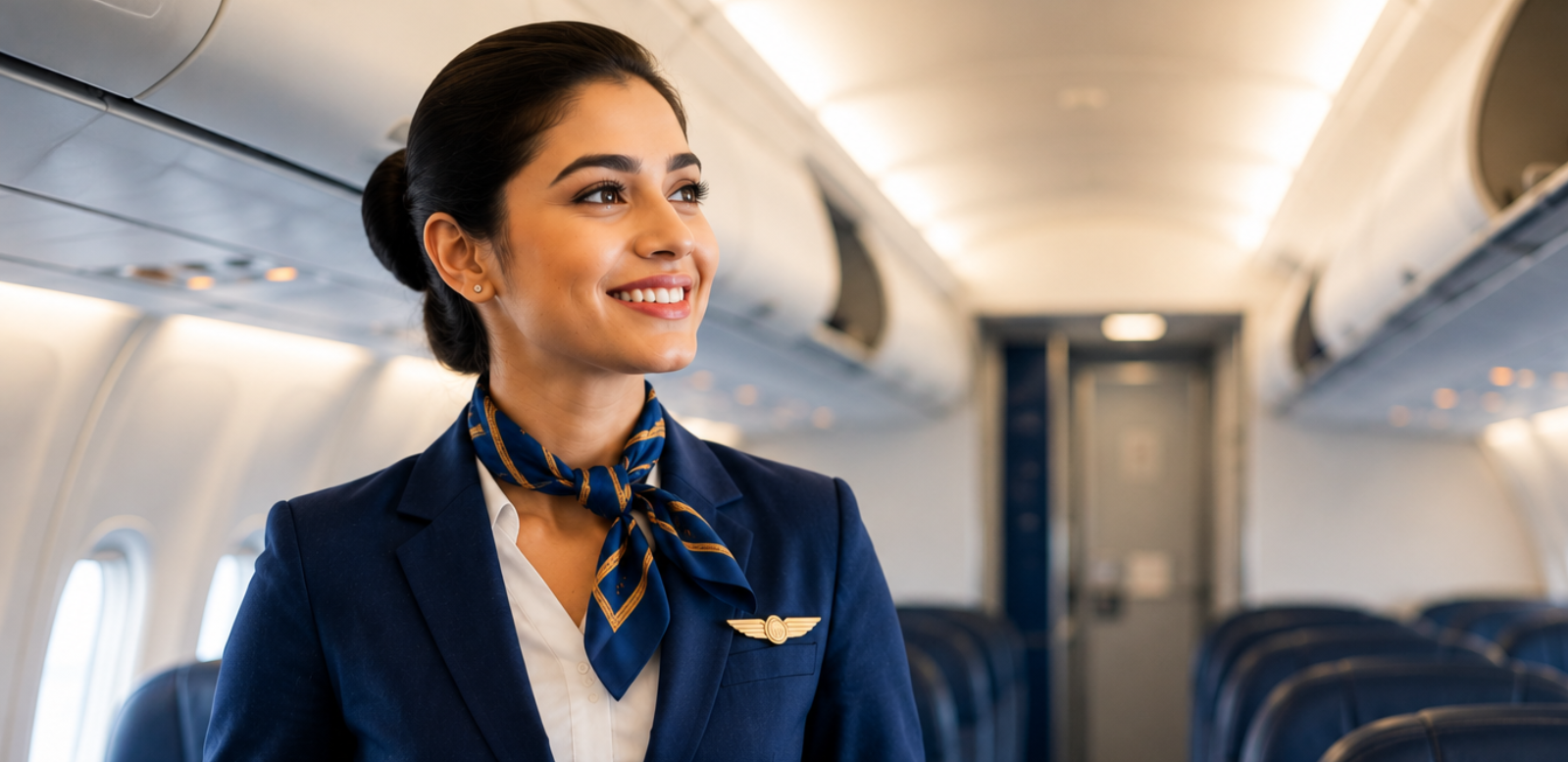
Airlines are selling trust, and part of that trust is visual. Posture, personal grooming, a genuine smile, and comfort with eye contact all shape first impressions in the first ten seconds. This isn’t about looking a particular way. It’s about looking prepared and being someone passengers feel safe approaching.
Teamwork and adaptability
A crew or ground team operates like a small ecosystem. Schedules shift, aircraft swap, and roles overlap when someone calls in sick. The people who thrive are the ones who help without being asked and adjust without complaining. Recruiters can often spot this in group discussion rounds within minutes.
Cultural awareness
Airports bring together passengers from everywhere. Knowing how to greet, listen and respond respectfully across languages and customs is a quiet advantage, especially for international routes.
Where Students Usually Go Wrong
In our experience, capable students lose chances for reasons that have nothing to do with knowledge.
They memorise answers instead of thinking. Interviewers can tell when a response is rehearsed word for word. Genuine answers, even imperfect ones, land better.
They underestimate body language. Crossed arms, wandering eyes or a slouch can undo an otherwise strong interview.
They treat English as a subject, not a habit. Speaking practice matters more than grammar drills. Students who talk every day, even to themselves, improve faster.
They wait until placements to work on themselves. Confidence builds slowly. Starting personality development in the first month of a programme gives you a very different candidate by the final one.
How to Build These Skills While You Study
You don’t need a special course to start. A few habits go a long way:
- Practise speaking daily. Record yourself explaining something for two minutes and listen back. It’s uncomfortable and extremely useful.
- Join group activities. Mock interviews, group discussions and role plays simulate real airline hiring rounds.
- Observe professionals. Watch how airport staff and cabin crew handle situations. Note what they do when a passenger is upset.
- Ask for honest feedback. Trainers and peers can point out habits you can’t see yourself.
- Read and stay informed. Knowing the industry, from airline networks to recent news, makes conversations richer and interviews easier.
Choosing Aviation Courses That Train the Whole Person
When you compare aviation courses, look past the syllabus list. Ask how much time goes to grooming, spoken communication, mock interviews and real-world practice. Ask whether trainers have industry exposure. Ask what support exists for placement preparation. A programme that treats personality development as a core module, not an optional extra, is far more likely to produce candidates airlines actually want.
At SPIPS in Thane, the aviation training programmes cover areas like cabin crew training, airline customer service, air ticketing and reservation, and tourism and hospitality, and are designed around practical, career-oriented learning. That focus on employable skills is what makes the difference between finishing a course and starting a career.
The Bottom Line
Certification opens the door, but it doesn’t walk you through it. Aviation careers reward people who combine technical readiness with steady communication, emotional control and genuine care for the person in front of them. Those qualities can be built, and the earlier you start, the stronger they become.
If you’re weighing your options, take the time to understand how a programme develops the person behind the certificate. Reach out to the team at SPIPS, Thane, to learn more about the aviation courses on offer and see how training there prepares you for the industry you want to join.